
A weak garage sale listing does something subtle but expensive: it makes shoppers work too hard.
When people are scanning garage sales, yard sales, moving sales, or estate sales, they are making split-second decisions. They want to know three things fast: What is it? Where is it? Is it worth the stop? If your listing dodges those answers with “multi-family sale” and “lots of stuff,” many shoppers will simply move on.
A strong listing is not flashy. It is clear. It is specific. And it helps buyers picture the stop before they ever pull up to the curb.
Start with a title that does real work
The title is your first filter. Vague titles ask for attention. Specific titles earn it.
Search guidance across multiple sources consistently points to titles that include the type of sale, the location, and the major item categories when possible. That means a title should do more than announce that a sale exists. It should tell shoppers why yours belongs on their route.
Instead of writing something broad and forgettable, build a title around:
- the sale type: garage sale, yard sale, moving sale, rummage sale, estate sale
- the city or ZIP code
- major categories or standout items
For example, the difference is simple:
- Weak: Garage Sale - Must See
- Stronger: Garage Sale in Springfield 62704 - Furniture, Tools, Baby Gear, Kitchen Items
That level of detail matters because shoppers are often deciding based on proximity and product fit. A person hunting for tools may skip a listing that never mentions them. A reseller scanning secondhand stops may prioritize a sale that names categories clearly. A family shopping a neighborhood sale may choose the stop with easy-to-understand location details.
The details shoppers look for first

Once someone taps your listing, they should not have to hunt for the basics. The research is clear here: exact dates, start and end times, and a precise address or clear location information are repeatedly recommended.
That means your listing should answer:
- What day or days is the sale happening?
- What time does it start and end?
- Where exactly is it?
If any of those are missing, attendance can suffer. Buyers care about convenience, and convenience starts with clarity.
This is especially important for garage sales tied to neighborhood sales or city-wide sale weekends, where shoppers are trying to map several stops together. If you want to understand how timing shapes turnout, it helps to think locally too. For example, some communities develop habits around when people shop and when they stop for the day. That’s why timing-focused reads like When Do Garage Sales Start? A Region-by-Season Guide to Garage Sale Timing (and Start Times) matter: shoppers often behave in patterns, and listings work better when they match those patterns.
Stop saying “something for everyone”
There may be no phrase in garage sale advertising less useful than “something for everyone.”
It sounds friendly, but it tells shoppers almost nothing. The same goes for “lots of stuff.” Buyers are trying to evaluate whether your sale fits what they collect, need, or casually browse for. Give them categories. Better yet, give them specifics.
A better description might mention:
- furniture
- tools
- kids’ clothes
- toys
- kitchenware
- home decor
- books
- sporting goods
- vintage items
- small appliances
And if you have standout inventory, say so. Real buyers are drawn by real things. If there’s a sturdy workbench, a matching dresser set, or a table full of quality kitchen items, name them. That is far more persuasive than filler wording.
This applies whether you are hosting a one-family yard sale, a moving sale with practical household items, or an estate sale where shoppers expect more curated inventory.
Photos are not decoration — they are proof

Photos do one powerful job: they reduce uncertainty.
Shoppers are much more likely to show up when they can see that the inventory is real, organized, and worth the trip. Research repeatedly supports using real photos of actual inventory, especially big-ticket or standout items.
The best visual mix is simple:
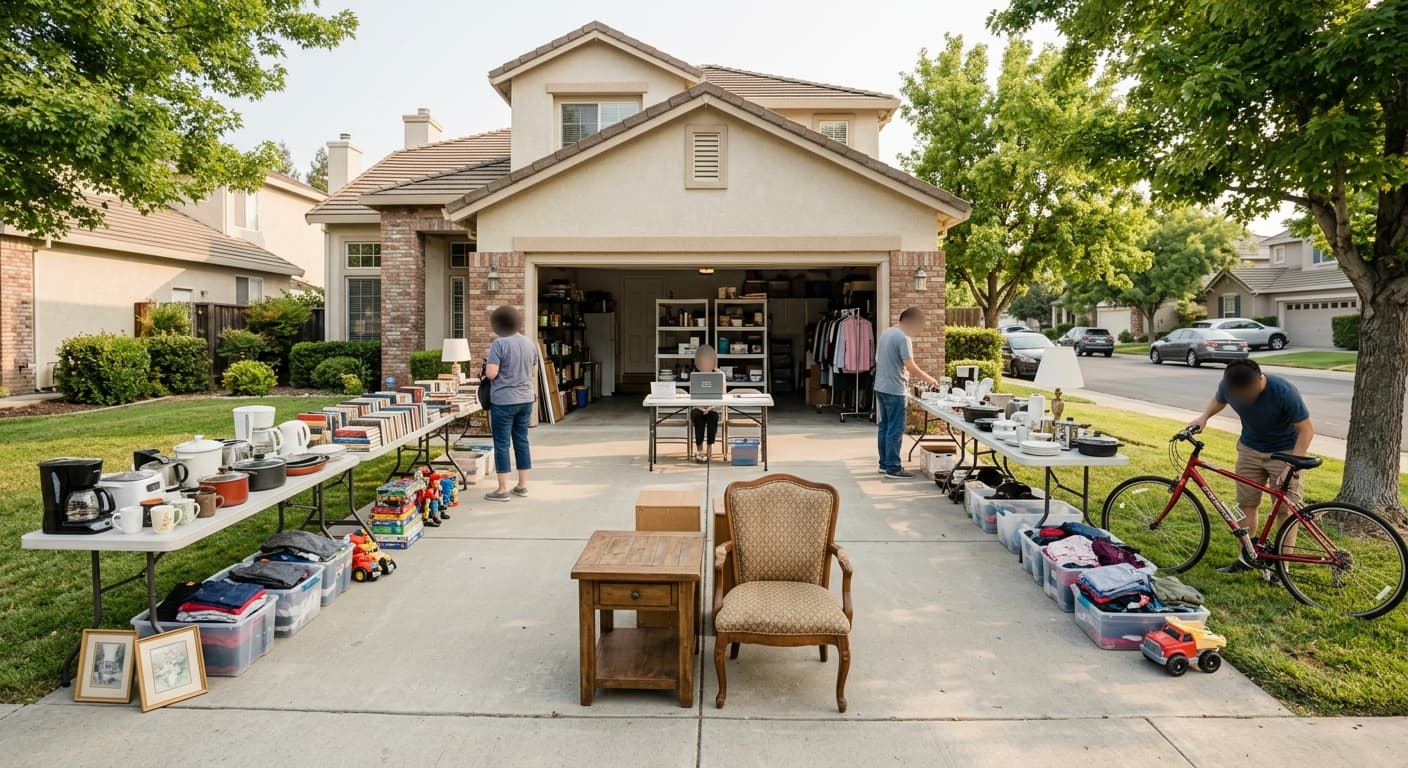
- one wide overview photo to show the scale of the sale
- several feature-item photos that highlight notable inventory
One source suggested using one wide-angle image plus 5 to 10 feature-item photos. That combination helps buyers answer two separate questions: How big is this sale? and What kinds of things are actually there?
Avoid photos that are too vague, too distant, or unrelated to the sale. A strong wide shot can communicate abundance. A close-up of a standout item can create intent. Together, they make your listing feel trustworthy.
This is especially helpful in busy markets where shoppers are comparing many listings at once, including during packed neighborhood and city-wide events like the kinds discussed in Aurora, Illinois Garage Sales: How to Do the City-Wide Weekends Like a Local.
Put your terms in plain English
Nothing cools garage sale traffic faster than surprise rules.
If buyers need to know something before they arrive, put it in the listing. Search results consistently recommend stating sale terms up front so shoppers know what to expect.
That can include:
- early bird policies
- whether special timing applies
- any other sale rules buyers should know before arriving
This is not about writing a legal document. It is about removing friction. If a shopper can understand the terms before leaving home, they are less likely to be frustrated when they get there.
Clear terms also help set the tone. They make your sale feel organized, and organized sales are easier to trust.
A listing checklist that actually helps

Before you publish, do a quick read-through and make sure your listing includes all of the essentials:
- A specific title with sale type, location, and item categories
- Exact dates
- Start and end times
- Full address or clear location details
- Specific item categories and standout pieces
- Clear sale terms
- Real photos of the actual inventory
- One wide overview image and several feature images
- Days and hours that make sense for local shopping habits
That is the difference between a listing that gets skimmed and one that gets added to the day’s route.
And when you’re ready to see how your sale fits into the bigger local picture—or you want to plan a day of garage sales, yard sales, rummage sales, moving sales, or estate sales—use City Wide Finds to browse local listings. The easier you make it for shoppers to understand your sale, the easier it is for them to show up.
For more on garage sale ad writing and sale promotion, sources include How to Write a Great Garage Sale Ad, How to Advertise a Garage Sale - Public Storage, and How to Get Buyers to Your Garage Sale - Tips for Effective Advertising.