

You walk into an estate sale and the obvious stuff grabs you first: the big dining table, the framed painting over the sofa, the shelf full of glassware catching the light. But the best estate sale finds are not just about what looks expensive at a glance. They’re usually the items you can assess clearly, transport realistically, and recognize as fairly priced.
That matters even more if you use City Wide Finds to map out a weekend route that includes estate sales, garage sales, and maybe a neighborhood sale or two. Estate sales often offer deeper household categories than a typical yard sale, so it helps to know what deserves your first ten minutes.
The categories shoppers most often check first
Across multiple estate sale guides, some categories come up again and again as worthwhile places to look. Not because they are guaranteed wins, but because they’re commonly recommended and often show up in solid variety.
Start with these:
- Furniture, especially antique furniture and quality home furnishings
- Vintage home goods and kitchen items
- Glassware, including iconic styles
- Cobalt blue ceramic kitchen canisters
- Original artwork
- Books, especially antique or rare books
- Rugs
- Lamps
- Picture frames
- Outdoor furniture
- Vintage home decor
- Tools
- Old electronics
- Collectibles such as:
- vinyl records
- rare coins
- collectible toys
- comic books
- signed sports memorabilia
- nostalgia items
That overlap shows up repeatedly in sources like 20 Things You Should Always Buy at Estate Sales, 10 Best Things to Buy at Estate Sales - AARP, and 11 Hidden Treasures to Look for at Estate Sales - Martha Stewart. The common thread is simple: estate sales are often strong places to find older household goods, decor, and collections that have lived together for years.

Don’t just hunt treasures—hunt categories you understand
The smartest estate sale shoppers usually arrive with a plan. Not a vague hope of “finding something cool,” but a short list of categories they actually know how to judge.
If you already understand furniture construction, spend time there. If you know books, scan shelves carefully. If you can identify styles of art or vintage decor with some confidence, that’s where your edge is.
A common mistake is buying on excitement instead of knowledge. Estate sales can create that feeling fast—rooms full of secondhand objects, limited time, other shoppers circling. But if you haven’t researched market value beforehand, it gets very easy to mistake “old” for “valuable.”
Before you go, study the categories that interest you so you can recognize a bargain when you see one. That advice comes up repeatedly in estate sale shopping guidance, including Estate Sale 101: Everything You Need To Know (As A First-Timer) and Finding Estate Sales: Tips For Maximizing Finds.
If you’re still learning the difference between sale types, this guide on Estate Sale vs Garage Sale vs Yard Sale: How to Tell What You’re Really Walking Into helps set expectations before you show up.
A quick estate sale decision test
Here’s a more useful question than “Is this interesting?”
Ask: Can I judge value, condition, authenticity, and transport without guessing?
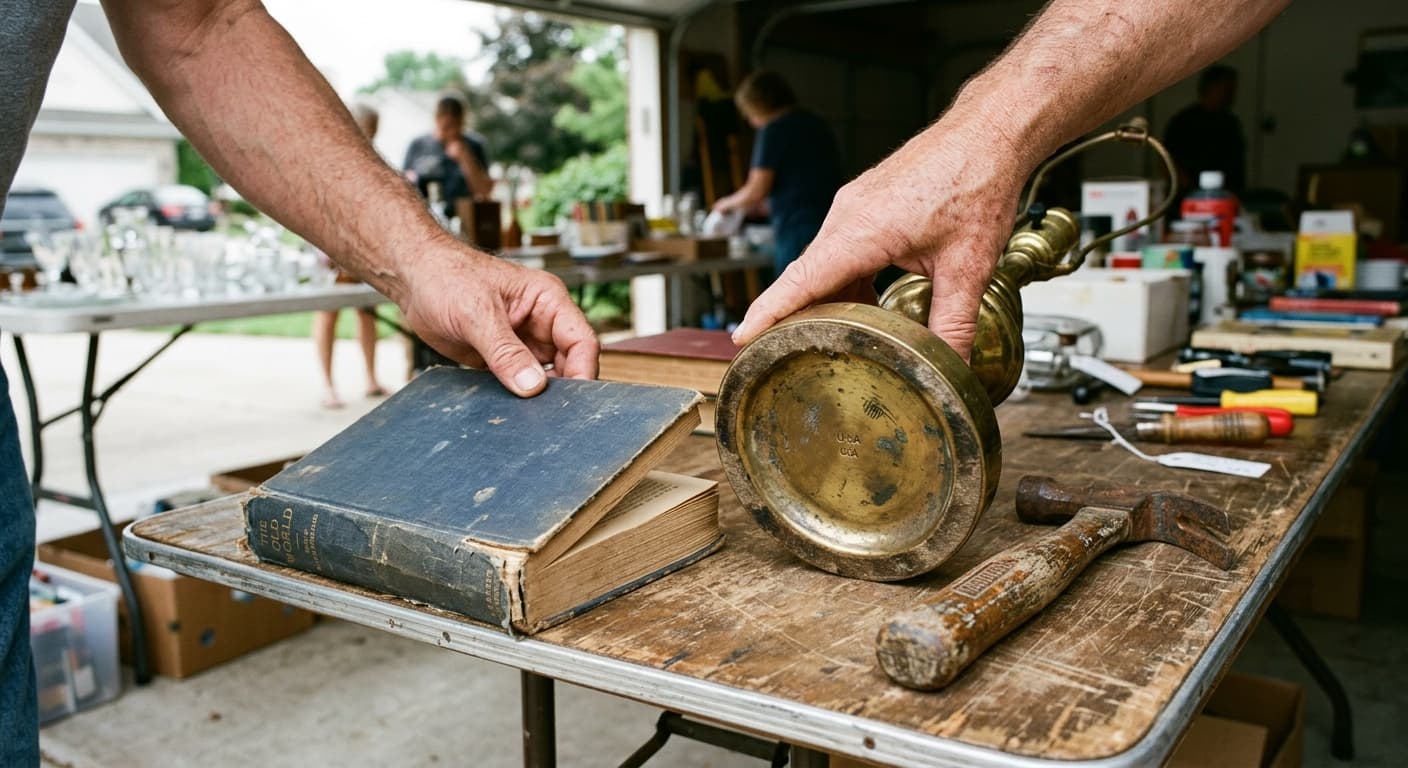
Imagine you spot a vintage lamp on a side table. It looks promising. The shade has age, the base has character, and the price seems reasonable.
Now slow down.
- Condition: Is there visible wear, damage, or missing parts?
- Identification: Is it clearly what you think it is, or are you filling in the blanks?
- Value: Do you know enough about current market value to call it a bargain?
- Transport: Can you actually get it home safely?
- Purpose: Are you buying it because it fits your home, collection, or resale goals—or because the room made it feel special?
That same filter works for art, rugs, antique furniture, tools, old electronics, and books. Original artwork may be worthwhile, but attribution matters. Antique or rare books can hold hidden value, but condition matters. A rug may look fantastic from across the room, but misidentification can change the whole equation.
The everyday items people skip too fast
One of the more useful reminders in the research: don’t dismiss ordinary-looking items too quickly.
Tools and old electronics are good examples. They may not have the visual drama of a carved cabinet or signed print, but they can still attract buyers or carry value. The same goes for practical home goods, frames, outdoor furniture, and decor pieces that blend into the background when a room is crowded.
Estate sales are full of objects that read as “used household stuff” until someone with category knowledge takes a closer look.
That’s why arriving early can help if you want the best selection. Several estate sale resources frame their advice around ranked lists of categories to watch, but the more useful takeaway is broader: the strongest finds are often hiding in plain sight, and timing plus preparation improve your odds of seeing them first.
The mistakes that cost shoppers the most
Most estate sale regrets are not dramatic. They’re small missteps that stack up.
Common ones include:
- arriving too late and missing top categories
- failing to research prices before shopping
- overlooking wear, repairs, or damage
- making impulse buys
- underestimating vehicle space for large purchases
- assuming ordinary items have no value
- misidentifying art, antiques, or rugs
- buying authenticity-sensitive items without enough knowledge
Transportation is a bigger issue than many shoppers expect. One source notes that many estate sales may not help load large items into your vehicle. So if furniture is on your list, bring enough space and a realistic plan for lifting and loading.
This is where estate sale shopping overlaps with garage sale strategy. The same discipline applies whether you’re walking into a rummage sale, a moving sale, or a packed estate sale: know what you want, know what it’s worth, and inspect what you buy. If you want more help planning around local listings, Estate Sales Near Me: How to Shop Smarter, Find Better Sales, and Avoid Costly Mistakes pairs well with this checklist.
What to prioritize on your next stop
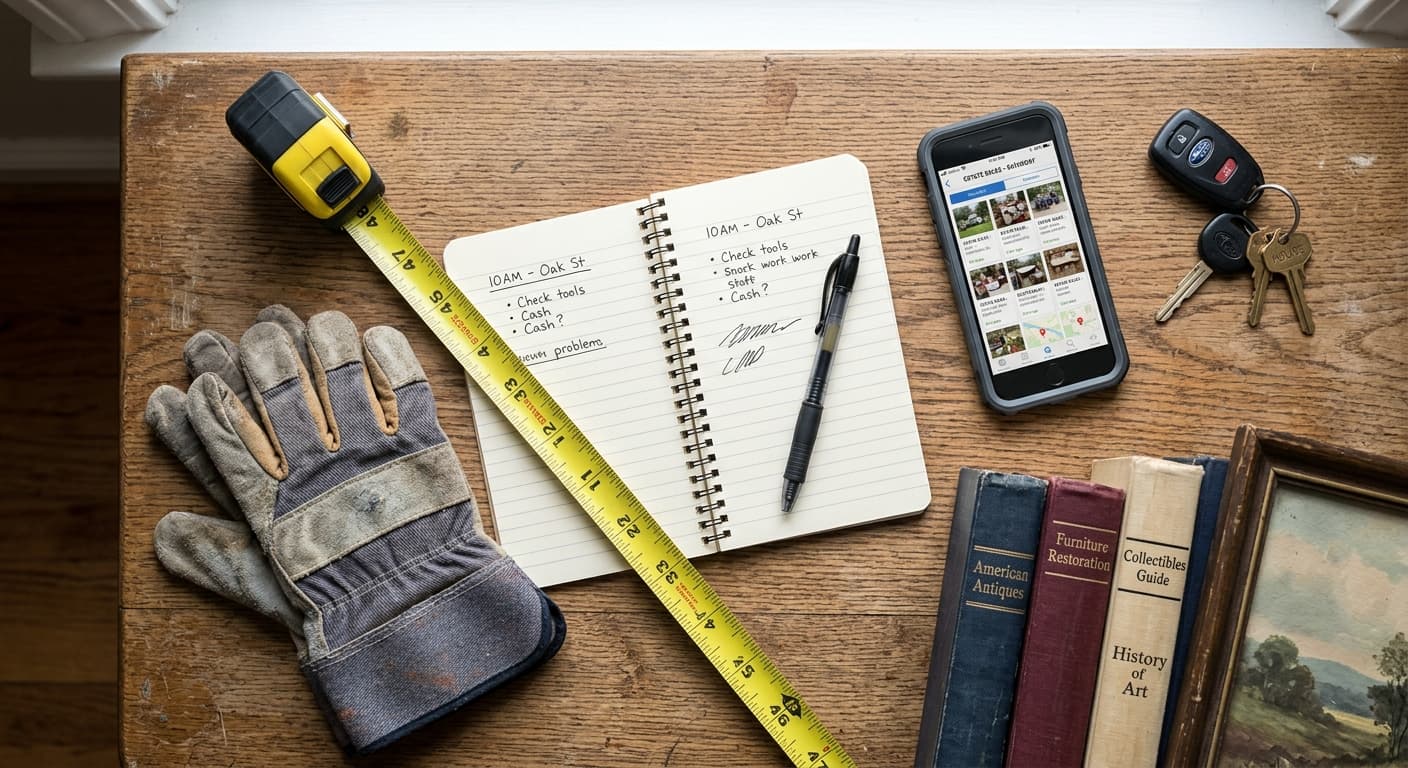
If you want a simple estate sale game plan, make it this:
- Start with furniture, art, books, home goods, decor, tools, and overlooked everyday objects.
- Research market value before you shop.
- Inspect condition closely.
- Be extra careful with authenticity-sensitive categories like art, antiques, rugs, jewelry, and designer goods.
- Buy cautiously when you can’t verify what you’re seeing.
Estate sales can be some of the richest stops in the secondhand world, especially when they’re part of a bigger day that also includes garage sales or yard sales nearby. If you’re building that route now, you can browse local sales on City Wide Finds and plan around the listings that match what you’re actually looking for.