
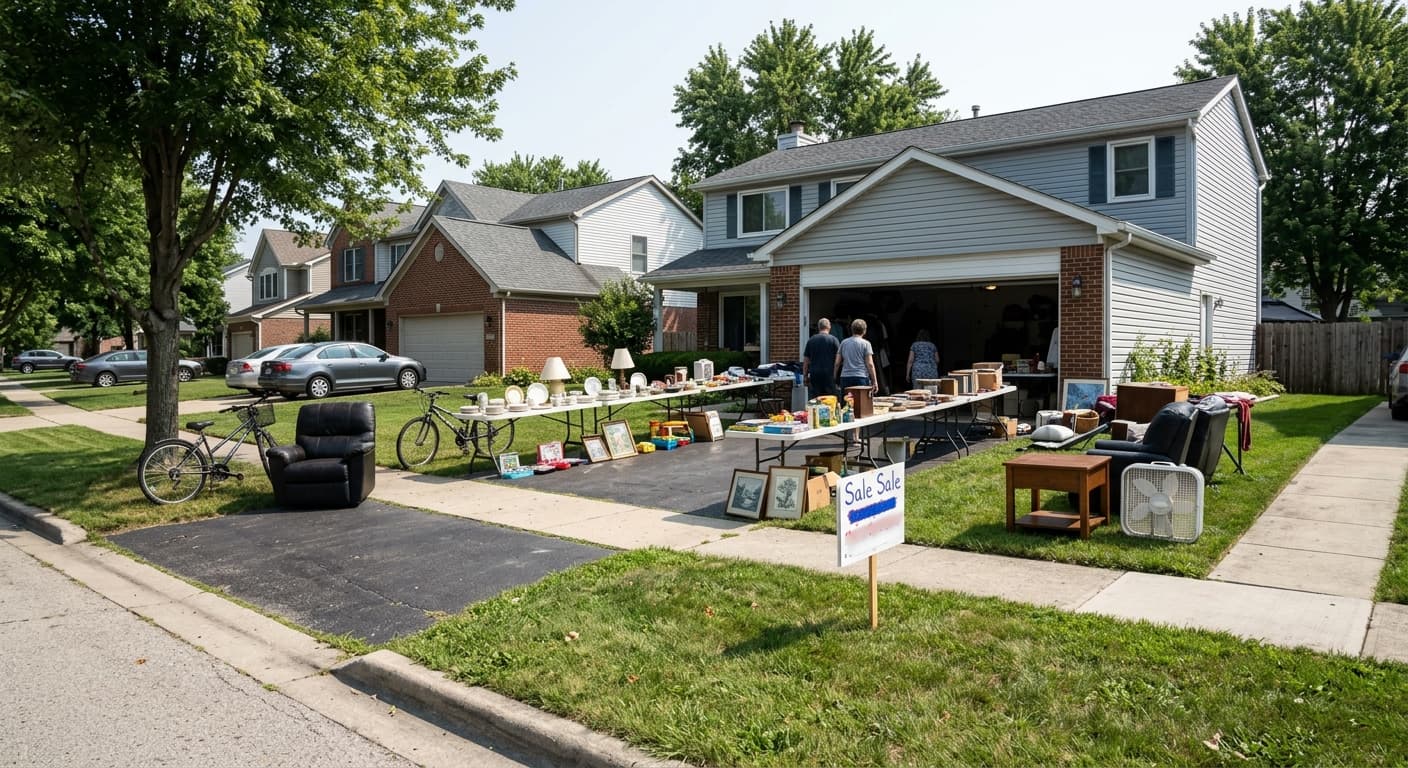
A handwritten sign can tell you a lot before you ever park the car.
“Garage sale” usually means folding tables, household extras, and a quick browse. “Yard sale” often means the same thing, just with different regional wording. But “estate sale” changes the expectation immediately: more of the home, more categories of items, and pricing that may be closer to market value.
That matters on City Wide Finds because sale labels aren’t just decoration. When you’re browsing local listings, the category helps you decide whether you’re heading out for low-cost everyday finds, a whole-home cleanout, or a sale with higher-value furniture, art, jewelry, or collectibles. For sellers, the label shapes who shows up and what they expect to see.
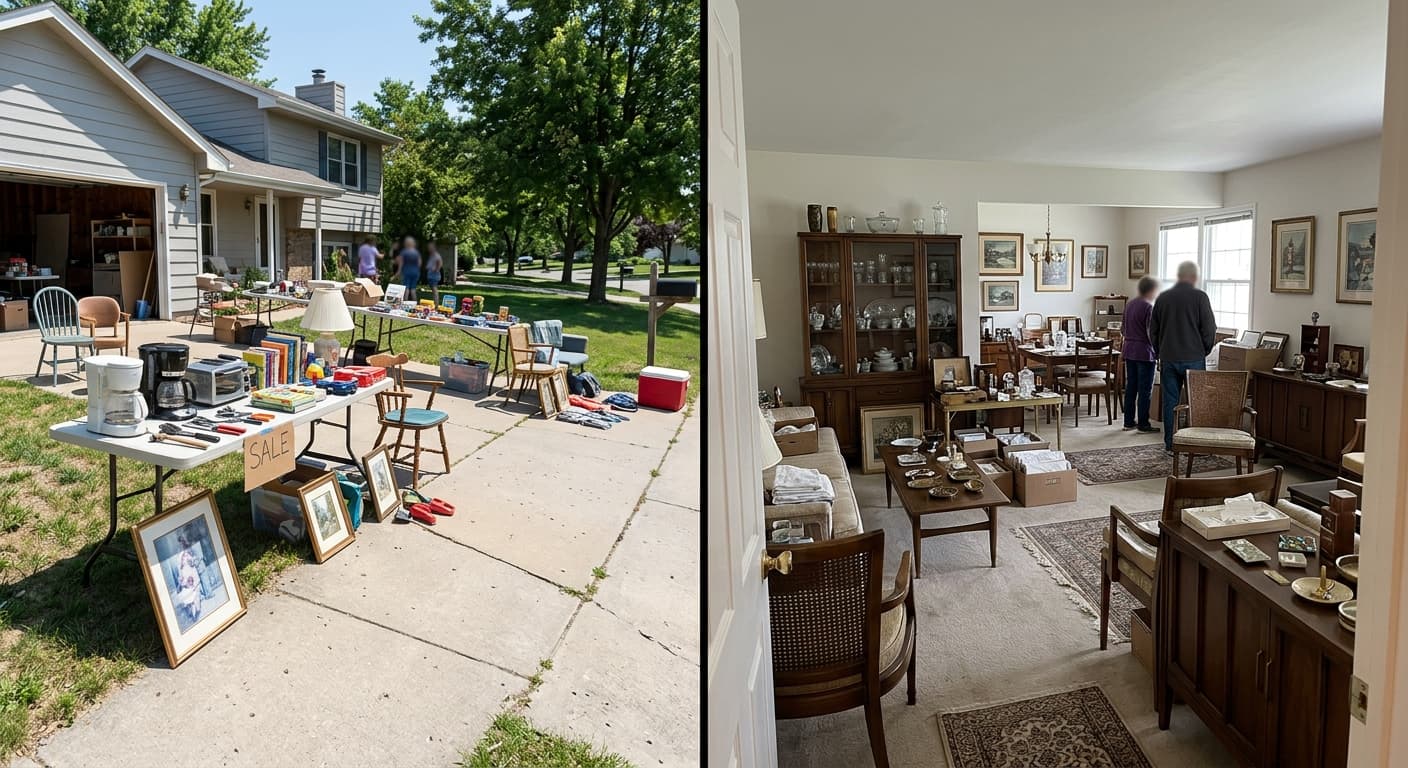
First, the short answer: yard sale and garage sale are often the same thing
Let’s clear up the most common confusion early.
A garage sale is commonly described as a casual, do-it-yourself sale of unwanted household items. A yard sale is also a casual personal sale and is often treated as another name for a garage sale or tag sale. In practice, many shoppers use “garage sale” and “yard sale” interchangeably, with the location doing most of the explaining: garage, driveway, or front yard.
These sales usually feature selected unwanted items rather than everything in the house, and they’re commonly held for a single day or weekend.
So if you’re scanning listings in City Wide Finds and trying to decode the difference between “garage sale” and “yard sale,” the safer assumption is this: the two labels often point to the same style of event, and the bigger clues are the item description, photos, and sale location.
The real dividing line is estate sale
An estate sale usually means much or all of a home’s contents are for sale. It’s typically larger than a garage sale, held on-site inside the home or across the property, and includes a wider range of items.
Here’s the simplest way to compare them:
| Sale type | Typical setup | What’s usually being sold | Pricing expectations |
|---|---|---|---|
| Garage sale | Garage, driveway, or yard | Selected unwanted household items | More casual, generally lower |
| Yard sale | Yard, driveway, or garage area | Similar to a garage sale; often just another regional term | More casual, generally lower |
| Estate sale | Inside the home or on the property | Much or all of the household contents | Often closer to market value, sometimes with appraisals or expert input |
That one shift—from “selected extras” to “much or all of the home”—explains most of the difference.
It also explains shopper behavior. Buyers often expect cheaper everyday items at garage sales and yard sales. At estate sales, they often expect furniture, antiques, art, jewelry, collectibles, and other higher-value household contents.
Which sale type fits your situation?
If you’re selling, the best label is usually the one that matches your inventory and your level of involvement.
Choose a garage sale or yard sale if you’re mainly clearing out:
- clothing
- toys
- knickknacks
- small household extras
- lower-priced everyday items
These sales may require less planning and organization, especially when you’re not trying to empty an entire house.
An estate sale may be a better fit if you’re dealing with:
- a whole house full of items
- fine furniture
- artwork
- collectibles
- antiques
- jewelry
Search results suggest this format can be better suited to higher-value pieces and may bring in more money when the inventory justifies it. It also tends to come with more work, more decisions, and more need for careful pricing.
If your situation falls somewhere in between, the label still matters. A moving sale, for example, may shape shopper expectations differently because buyers may assume you’re parting with a wider mix of useful household goods. A rummage sale can signal a different style of inventory and pricing as well. And while neighborhood or city-wide sales are often event formats rather than separate item categories, those formats can still influence how shoppers plan their route and prioritize stops. If you’re writing your own listing, clarity helps. If you want more people to understand what you’re offering before they arrive, The Garage Sale Listing Formula That Gets More Shoppers to Show Up is worth a read.

Shopping one without shopping the other
A smart secondhand shopper doesn’t approach every sale the same way.
At garage and yard sales, buyers often look for practical, low-cost finds. At estate sales, shoppers often go in expecting fuller household contents and more valuable or unusual pieces. That doesn’t mean every estate sale is expensive or every garage sale is cheap—it means the starting expectation is different.
A few estate-sale-specific habits matter:
- Be respectful in the home and on the property.
- Test electronics when possible.
- Expect firmer pricing than you might see at a garage sale.
Those points come up repeatedly because estate sales are often more structured and more closely priced to value. If you’re buying from a full-home setup, it’s a different environment than digging through a driveway table of spare kitchenware and toys.
If estate sale shopping is your thing, you may also like Estate Sales Near Me: How to Shop Smarter, Find Better Sales, and Avoid Costly Mistakes.
The mistakes that blur the line
A lot of frustration comes from calling a sale one thing while running it like another.
On the selling side, common mistakes include pricing estate items too high, throwing items out before they’re evaluated, misidentifying antiques or collectibles, underestimating the time commitment of running an estate sale, and trying to do everything alone. Those are estate-sale problems because the inventory is broader, the value can be higher, and the setup is more demanding than a casual garage sale.
On the buying side, common mistakes include shopping estate sales without testing electronics and behaving disrespectfully at the sale.
In other words: the sign out front sets a promise. If you call it an estate sale, shoppers expect more of the house, more variety, and more deliberate pricing. If you call it a garage or yard sale, they expect a simpler setup and selected unwanted items at casual prices.
That’s why accurate categories matter so much when you browse or post on City Wide Finds. They help shoppers plan better and help sellers attract the right audience.
One practical rule for City Wide Finds users
When in doubt, think in terms of scope.
If the listing suggests a handful of unwanted items in a garage, driveway, or yard, you’re probably looking at a garage sale or yard sale. If the listing suggests much or all of the contents of the home, held on-site inside the house or across the property, you’re likely looking at an estate sale.
That one rule will help you browse faster, set expectations better, and choose the right label when you create a listing of your own.
And if you’re ready to put that distinction to work, you can browse local sales on City Wide Finds and sort through garage sales, yard sales, moving sales, rummage-style events, and estate sales with a clearer idea of what each one usually means.